

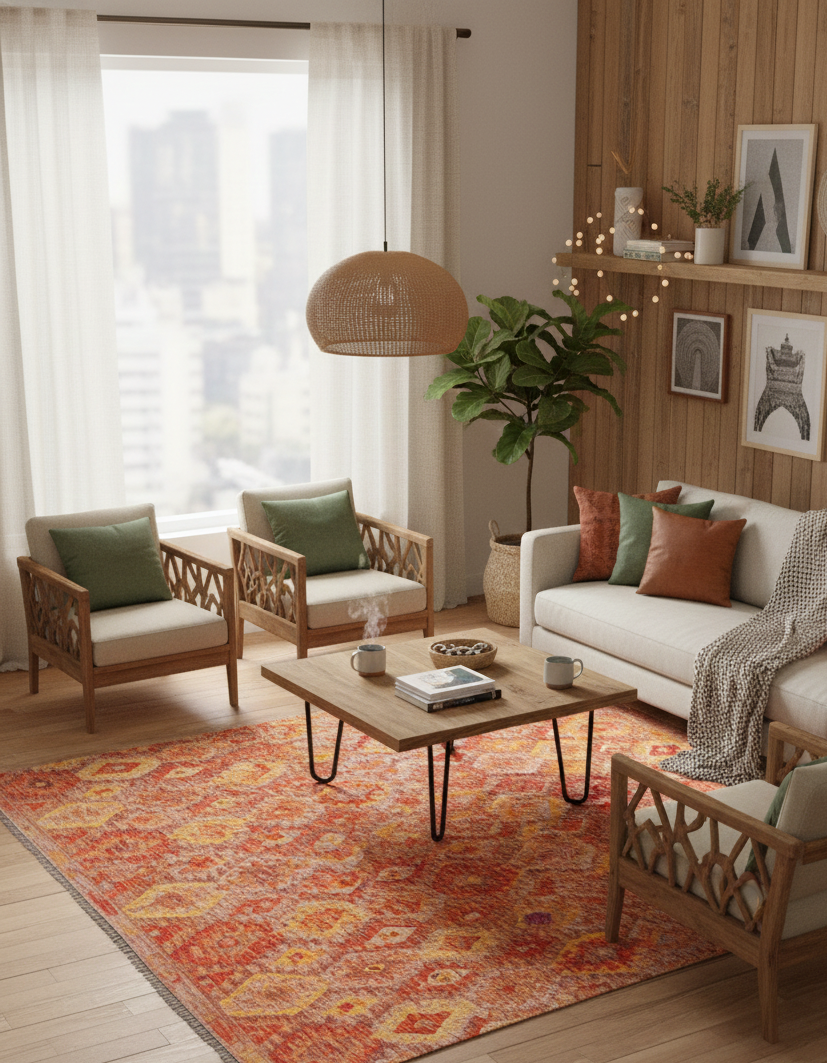
How to Decorate in Moroccan Style with Kilim and Berber Rugs
Moroccan style is one of the most loved interior design directions of recent years — and for good reason. It's rich but not chaotic, colourful but not kitsch, deeply rooted in craft tradition yet perfectly compatible with the contemporary home. The rug is the central element of this style: vibrant kilims, natural-wool Berbers, Afghan textiles — they are all protagonists. This guide explains how to use them.
What is Moroccan style and where does it come from?
Moroccan style has its roots in the Berber, Islamic and Andalusian decorative art that intertwined for centuries in Morocco, Algeria and Tunisia. Its most recognisable features:
- Geometric patterns: lozenges, stars, zigzags and polygonal shapes drawn from Berber tradition. The designs are often symmetrical and rhythmically repeated.
- Warm, earthy palette: terracotta, ochre, brick red, sand, ivory, with accents of indigo blue and turquoise green. The contrasts are strong but balanced.
- Natural materials: wool, jute, cotton, leather, cedar wood. The authenticity of the materials is an essential component of the look.
- Handmade craftsmanship: hand manufacture — visible in the irregularity of the patterns and the small variations in colour — is part of the charm.
Which rugs should you use for Moroccan style?
Three categories of rug are perfect for this style:
- Kilim: the absolute protagonist of Moroccan style. Flat-woven (no pile), with vivid geometric patterns in wool dyed with natural colours. The Afghan kilim — with its strong geometries and robust wool — is particularly suitable. Explore our selection of kilim and Afghan kilim in particular. For everything you need to know, read our complete guide to kilim.
- Berber: natural-wool Berber rugs (often ivory with geometric designs in black or dark brown) are the other pillar of Moroccan style. Their thick, soft texture creates a beautiful contrast with hard floors. Learn more with our guide to Berber rugs and browse the selection of Berber rugs.
- Afghan Kaudani: Kaudani rugs have a chromatic depth and a density of pattern that make them perfect for a space inspired by the Middle East and North Africa. Warm colours, complex tribal patterns. Read our guide to Afghan Kaudani kilim and browse the selection of Afghan kilim.

How to place Moroccan-style rugs
Moroccan style isn't afraid of layering — overlapping rugs is a traditional practice:
- Neutral base + kilim on top: lay a jute rug or an ivory wool Berber as a base, and layer a smaller, colourful geometric kilim on top. The effect is layered and authentic.
- A large Berber as protagonist: in the living room, a 200×300 cm ivory Berber under the sofa defines the living area with understated elegance. That alone is enough to evoke Moroccan style when paired with the right accessories (kilim cushions, metal lanterns, leather poufs).
- Kilim in the bedroom: a colourful kilim at the foot or side of the bed creates a controlled burst of colour. It works very well in bedrooms with white or light-grey walls.
- Entrance: a kilim runner in the entrance is the perfect calling card for a home with character. It stands up well to traffic thanks to its robust flat construction.
What to pair with kilim and Berber in Moroccan style
The rug is the centre — the rest needs to be right around it:
- Low wooden furniture: coffee tables and sofas with short legs or no legs (low ottoman-style seating) bring the setting closer to the ground, emphasising the rug.
- Ethnic cushions and textiles: kilim or Berber-fabric cushions, wool throws with tribal patterns. Layering textures is essential.
- Lanterns and metals: brass, copper and wrought iron — in lamps, candleholders, mirrors. The contrast between metal and the rug's wool is visually powerful.
- Walls: works best with white walls (typical Moroccan homes have white tadelakt walls) or sand tones. Avoid overly colourful walls that compete with the rug.
- Plants: cacti, fiddle-leaf figs, indoor palms — nature echoes the style's geographic origins.

How to manage colours: lots of personality, zero chaos
The most common fear with Moroccan style is "it becomes too much". The rule is simple:
- Choose one dominant palette of 2–3 colours (e.g. terracotta + ivory + indigo blue)
- Use the rug as the carrier of the main colours
- Repeat those colours in accessories (cushions, vases, lamps) in smaller proportions
- Keep the large surfaces (walls, floor, sofa) neutral
With this approach, even a very colourful kilim comes into harmony with the rest of the room.
Kilim and Berber at CarpetLiving for your Moroccan project
For an authentic Moroccan style, CarpetLiving offers the widest selection: over 500 kilim and Berber rugs selected directly from Afghan and Berber markets. Afghan kilim are particularly suited to those looking for strong patterns with quality wool and deep colours. Every product is photographed in detail with a description of the pattern.
→ Browse all kilim | → Browse Berber rugs
Moroccan style with rugs, in summary
- The three pillars: Afghan kilim (vivid geometric patterns), wool Berber (ivory with black designs), Kaudani (deep, rich colours)
- Layering: overlay a colourful kilim on a neutral base of jute or ivory Berber
- Colours: choose a palette of 2–3 colours and repeat it at scale in accessories
- Pairings: low wooden furniture, metal lanterns, white or sand walls
- For great results on a modest budget: a colourful kilim in the entrance or bedroom is enough to transform a room


Share:
Outdoor Rugs for Terrace and Garden, Summer 2026 Guide
Rug Under the Sofa, On Top or In Front? The Definitive Guide