

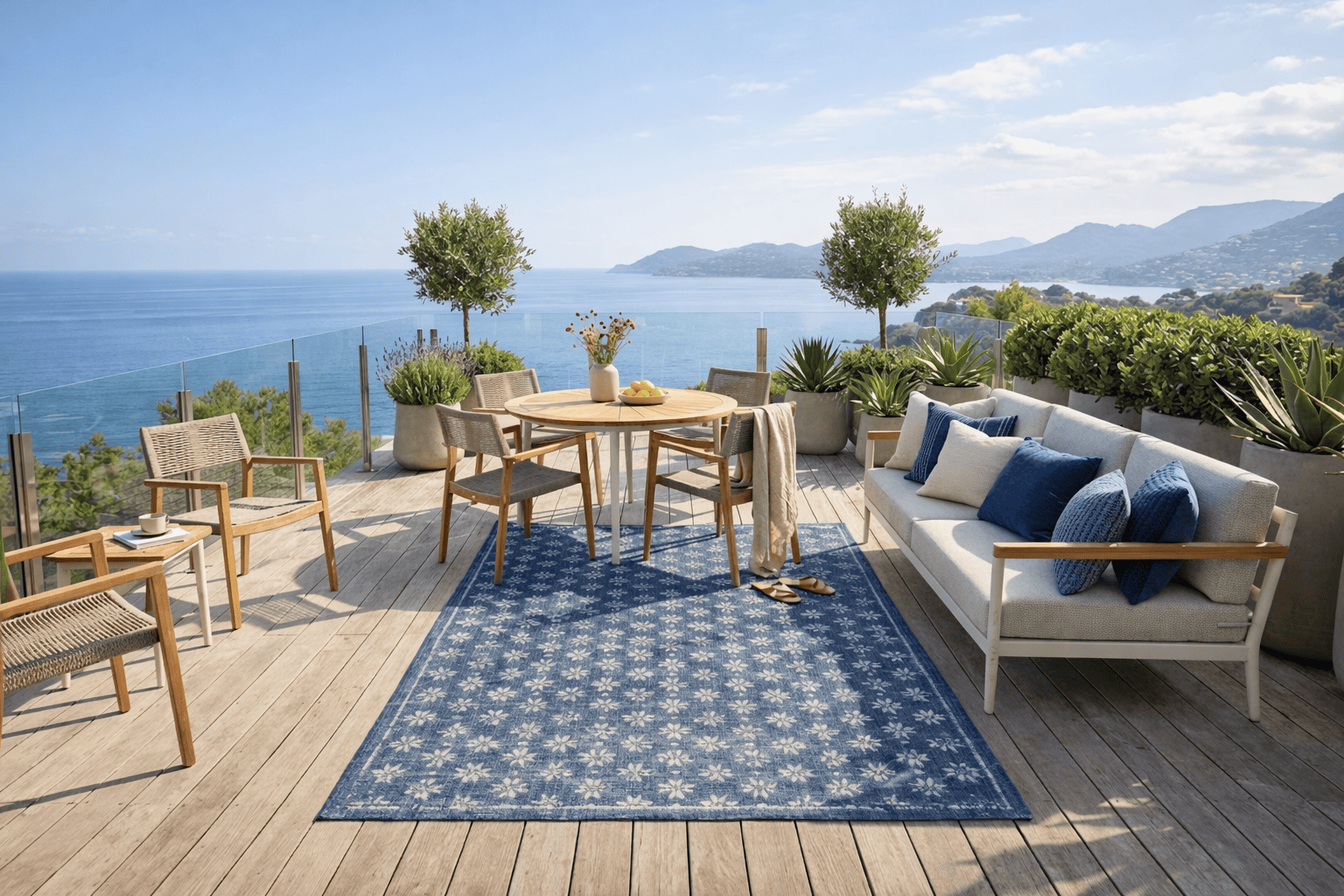
There's a precise moment when the outdoors stops being "outside" and becomes home: when you sit down at the table and feel like staying. Not to eat quickly and go back inside, but to chat, pour another glass, let the evening unfold naturally. That's when you know if your outdoor dining area truly works.
And often, the difference between "it works" and "it annoys me" is the rug.
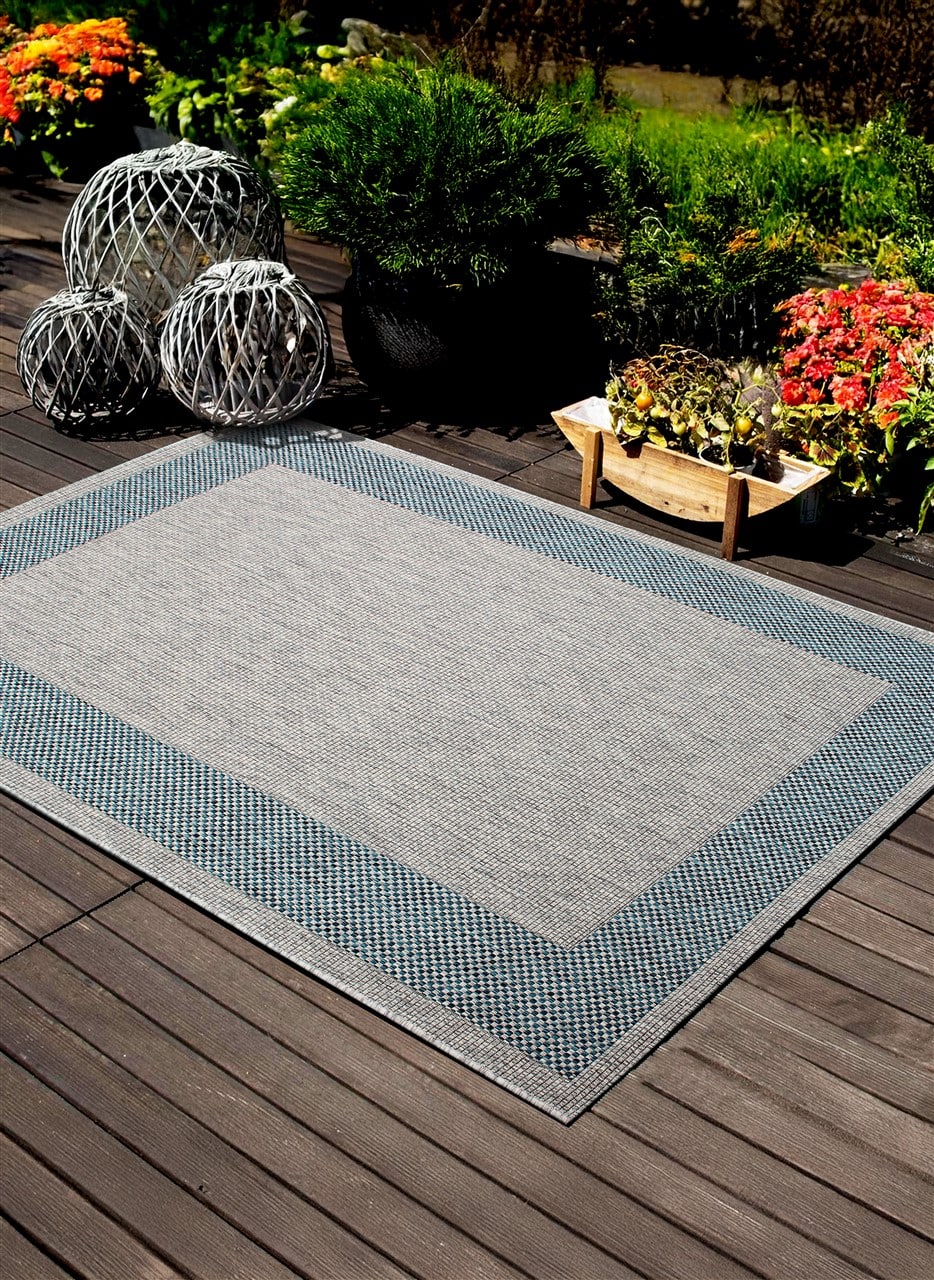
It seems like a detail, but it isn't. An outdoor rug under the table:
- shapes the space and makes it tidier
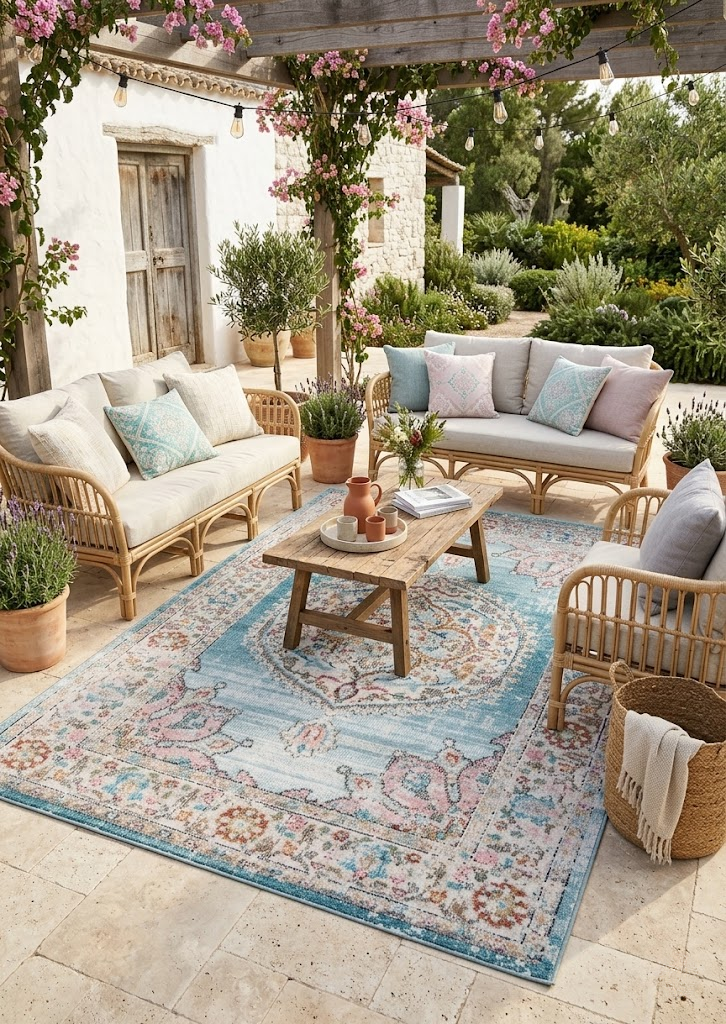
- makes the dining area feel like a real room, not just a temporary setup
- improves the feeling underfoot (and also the sound: less echo, less noise)
- protects delicate surfaces, especially on well-maintained terraces
But then real life happens: chairs scraping, crumbs, wind, summer rain, dust. And the rug that looked perfect in photos, in person, it curls up or moves. At that point, it's no longer a style element: it's a hindrance.
The first rule: the size is not determined by the table, it's determined by the chairs
Most mistakes originate here. People buy a rug "the size of the table" thinking they are being cautious. The result: every time you move a chair to get up, its legs go off the rug, get stuck on the edge, and frustration begins.
An outdoor dining area should be smooth. You should be able to sit down and get up without thinking about anything, otherwise it's not relaxation, it's management.
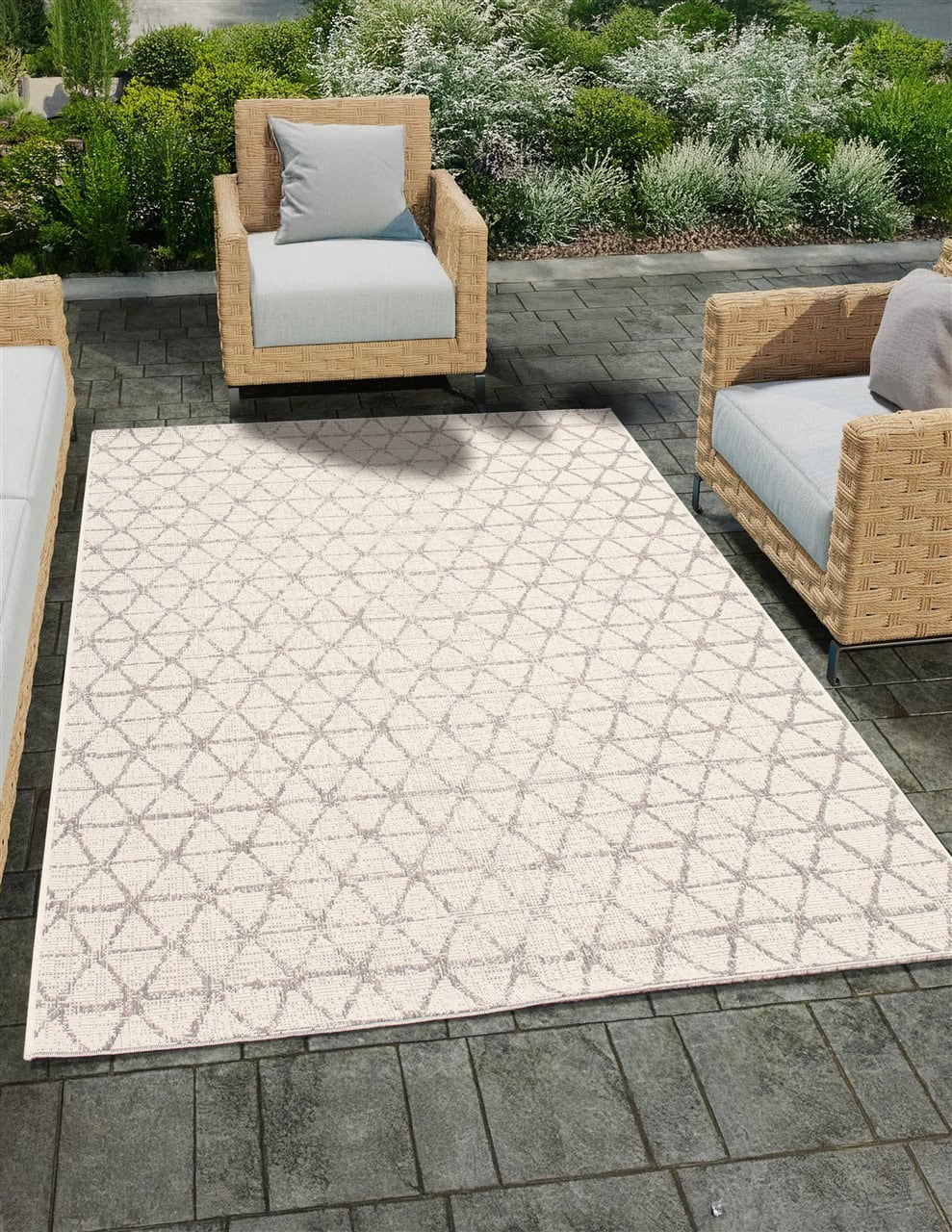
The right idea is this: the rug must be large enough to accommodate the table + chairs even when the chairs are pulled back.
In practice, this often means giving the table "space" around it. It's not waste: it's comfort.
Round or rectangular table: it changes the perception of space
Under a round table, a round rug is a touch of elegance: it aligns the geometry and makes the area softer. But it only works if it's large enough to include the chairs. If it's small, it becomes a target, not a base.
Under a rectangular table, a rectangle is almost always the most natural choice: it organizes, structures, and "draws" the perimeter of the dining area.
The choice of shape, however, is not just aesthetic: it's also practical. With chairs, a rug that's too small wears out faster and forces you to experience the outdoors like an obstacle course.

Outdoor = wind. And wind has no respect for your design choices
Outdoors, stability is everything. Even a "heavy" rug can move if:
- the floor is smooth
- the wind comes in like a "corridor"
- the area is very exposed
And when a rug moves under a dining table, it's not just annoying: it alters the position of the chairs, creates creases, and damages the edges. It's a problem that grows over time.
Here, a very unromantic but very smart choice wins: opting for outdoor rugs with a compact structure and, if necessary, stabilizing them with solutions suitable for outdoor use. There's no need to turn everything into a construction site: just avoid the "springy" and very lightweight rug that seems made to take flight.
Materials and weave: in the dining area, easy-to-clean wins
Outdoor dining is made of:
- crumbs
- small splashes
- drops of wine or oil (sooner or later)
- dust that arrives even when you don't invite it
So the most sensible choice, almost always, is a weave that doesn't retain everything. More compact and "flatter" textures tend to be more manageable: the less they trap, the more they simplify your life.
The rug under the table shouldn't be a "pampered" rug. It should be a rug that lets you enjoy dinner without thinking about maintenance.
Style: how to make it look like a project, not an addition
A well-designed outdoor dining area has a simple principle: consistency. The rug can do two different jobs:
- To tie together: by choosing colors and textures that echo furniture and materials (wood, metal, weaves, stone).
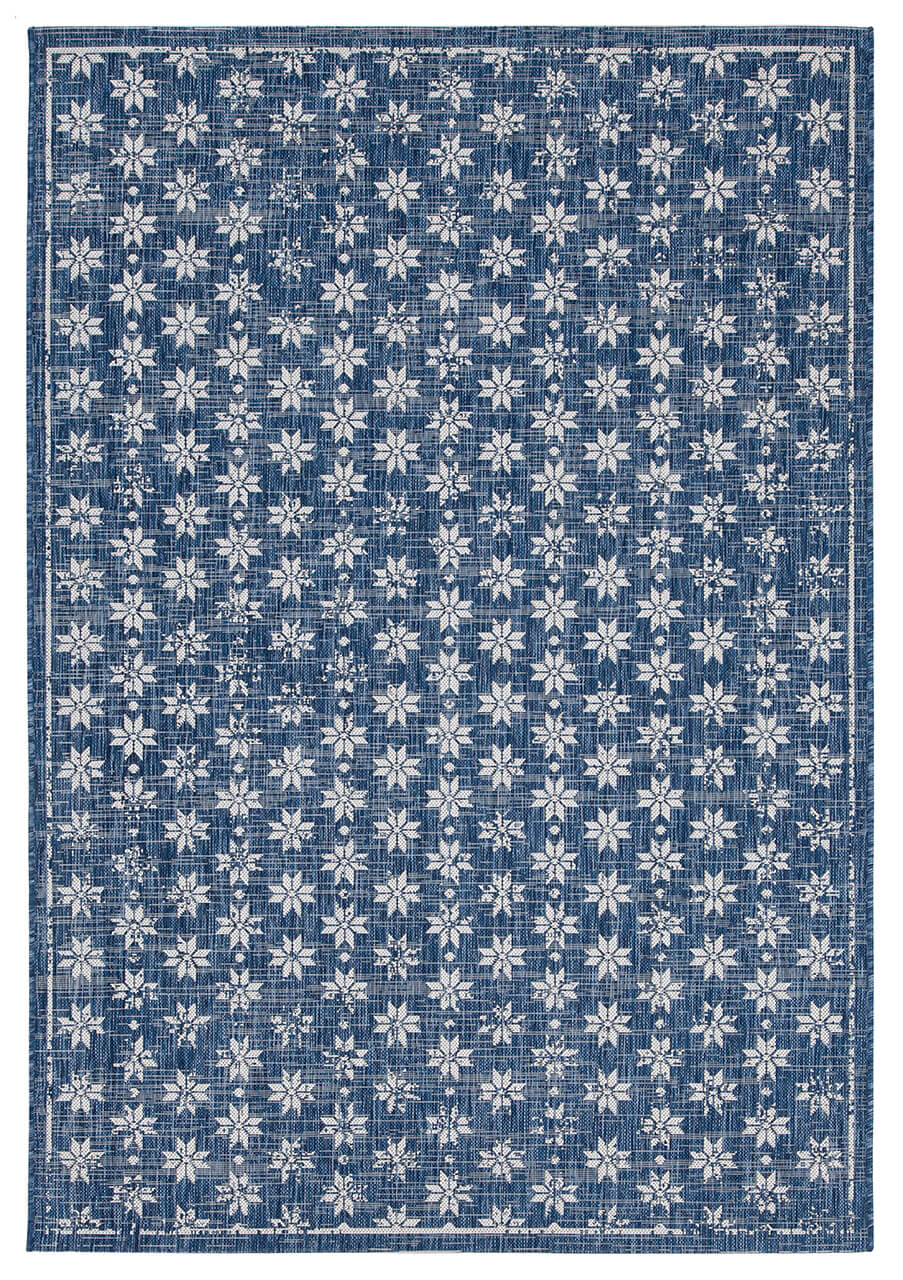
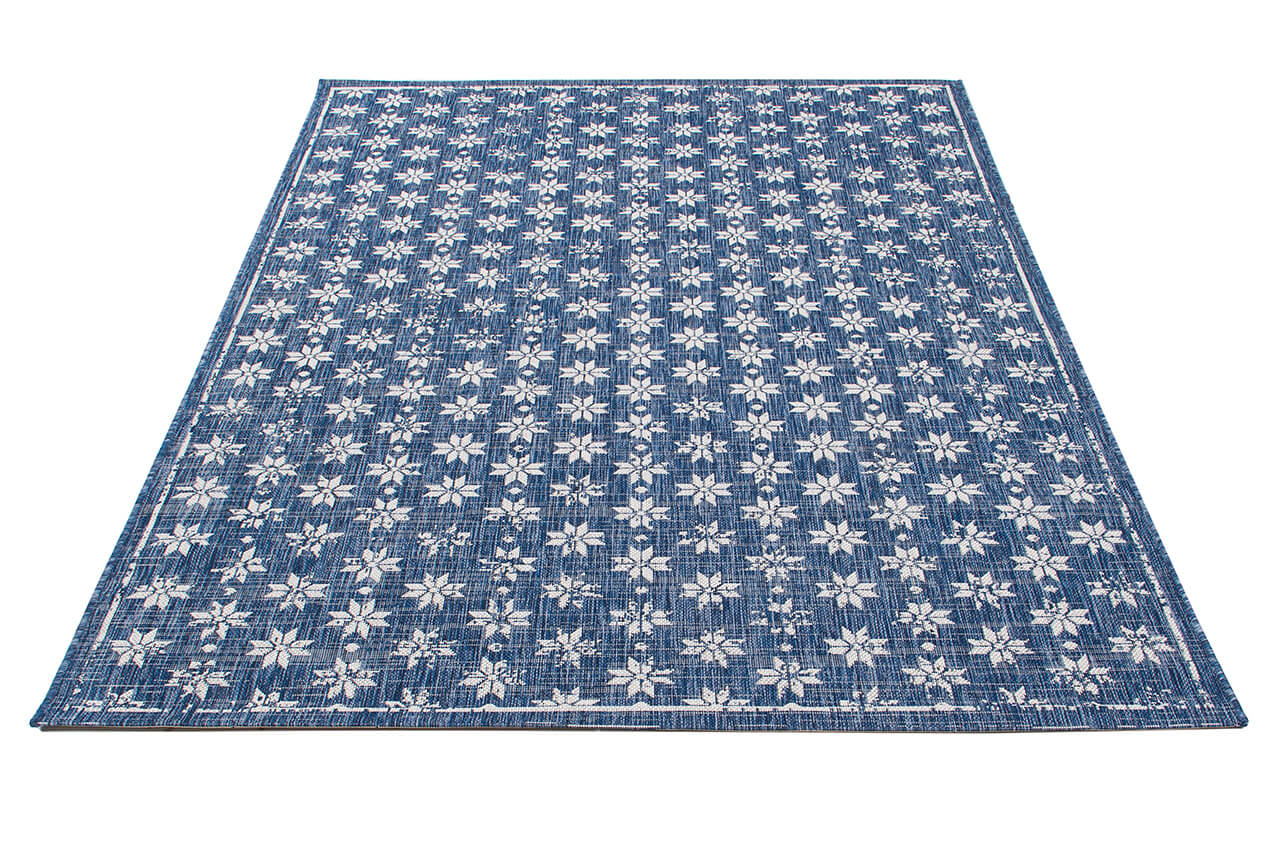
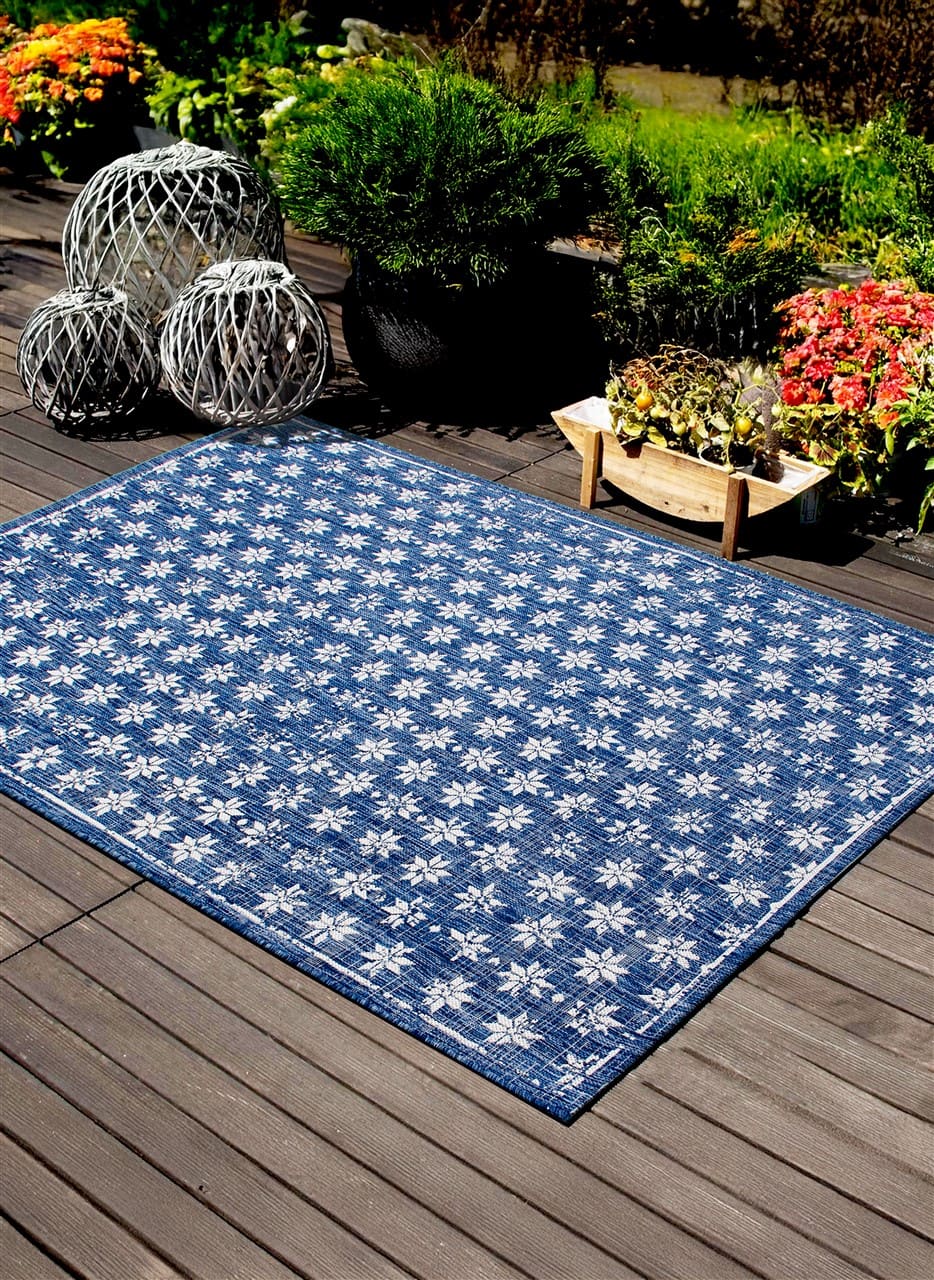
- To add character: by introducing a pattern that acts as a "signature" for the space, without competing with everything else.
If the outdoor area is already rich (plants, cushions, lights, accessories), the rug should bring order. If the outdoor area is minimalist and clean, the rug can bring personality.

The most common mistake: small rug out of "fear"
It's a psychological dynamic: people choose small so as not to make a mistake. But that's precisely where you make a mistake.
A small rug under an outdoor table does two negative things:
- makes the space less tidy (chairs outside, strange edges)
- increases wear on the edges (chairs "bite" it)
If you have to choose between two sizes, often the larger one makes everything more credible. The dining area looks designed, not improvised.
FAQ
What size should an outdoor rug under the table be?
It must accommodate the table and chairs even when the chairs are pulled back. If the chairs go off, the rug is too small.
Is a round or rectangular rug better under a table?
Generally: round table → round rug; rectangular table → rectangular rug. But size matters more than shape.
Does the wind move outdoor rugs?
Yes, especially on exposed terraces. It's better to choose compact and stable structures and, if necessary, implement solutions to improve grip.


Share:
Bedroom rug: size, placement, and atmosphere
Rugs for Airbnb: The choice that increases bookings