

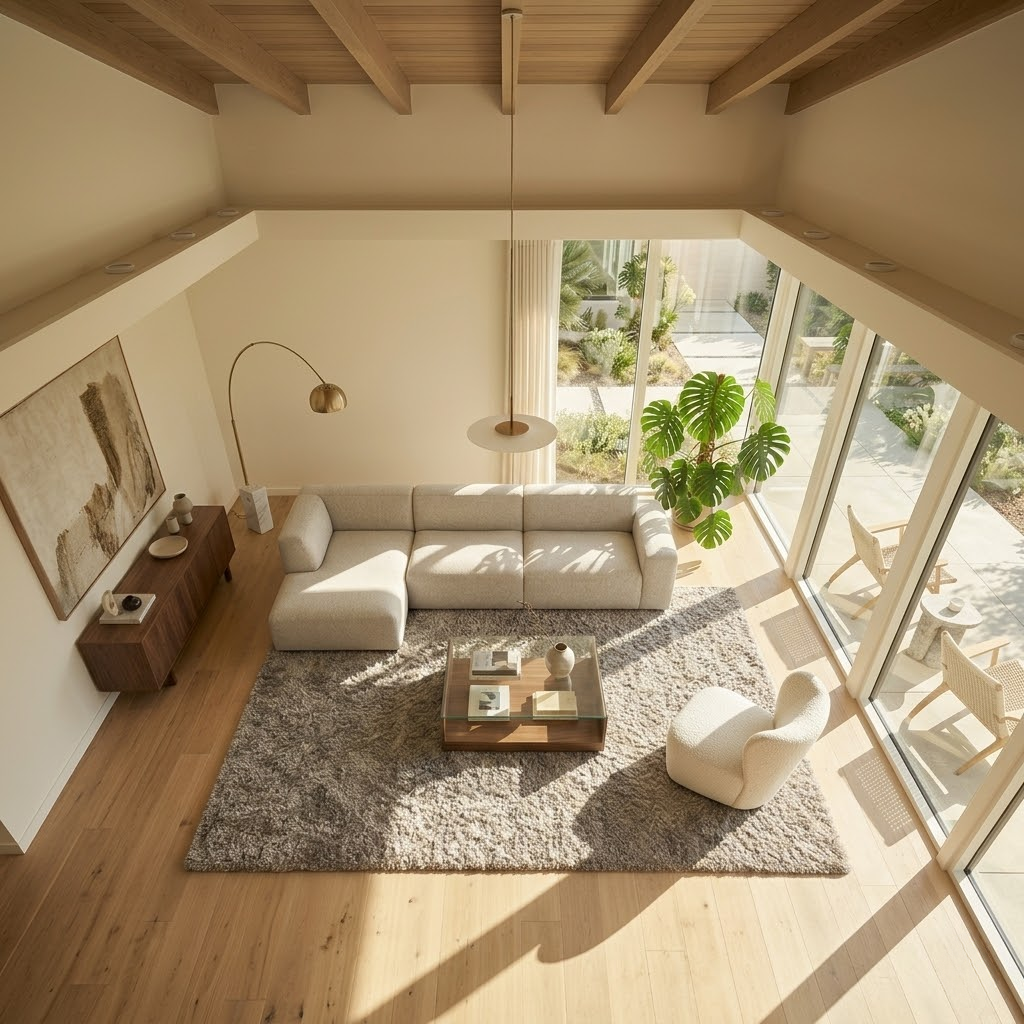
Rugs and acoustics: how to reduce noise at home with the right rug
Do you live in an apartment with parquet or ceramic floors and every step can be heard from one floor to another? Or does your open-plan space echo like a cathedral during conversations? A rug is one of the most effective and aesthetic tools to improve home acoustics. This guide explains how it works and which one to choose.
How does a rug reduce noise?
Rugs reduce noise in two distinct ways:
- Sound absorption: The rug's fibers absorb sound energy from waves bouncing off hard floors, reducing internal reverberation in the room. This improves conversation quality and reduces perceived "echo."
- Impact sound insulation: The pile layer and underlay cushion the impact of footsteps, reducing noise transmitted to apartments below. Technical parameters: NRC (Noise Reduction Coefficient) and ΔLw (impact reduction in dB).
A good quality rug with an underlay can reduce impact noise by 25–40 decibels. For reference, a 10 dB reduction is equivalent to halving the perceived sound.
Which material is most effective for sound insulation?
Not all materials work the same way for acoustics:
- Wool: The best natural material for sound absorption. The crimped (wavy) structure of wool fibers traps air and absorbs mid and high frequencies excellently.
- Shaggy (long pile): High pile density creates a thick layer that dampens both footfall and reverberation. An excellent choice for living rooms and bedrooms.
- Jute and natural fibers: Decent absorption, but inferior to wool. Better than bare ceramic, but not the optimal choice for serious acoustic problems.
- Synthetic (polypropylene, polyester): Variable. Short-pile synthetic rugs have modest acoustic performance; long-pile or velvet ones are closer to shaggy.

How thick should a rug be to reduce noise?
The total thickness (rug + underlay) is a critical factor. Practical guidelines:
- Total thickness less than 10 mm: minimal acoustic effect
- 10–20 mm: good reverberation absorption, noticeable footfall attenuation
- Over 20 mm: excellent performance, comparable to dedicated sound-absorbing solutions
The underlay alone contributes up to 50% of the acoustic effectiveness. Always use an underlay of at least 8–10 mm of natural felt or dense foam to maximize the result.
What is the best rug for acoustics in the living room?
In the living room, the main problem is reverberation created by hard surfaces (floor + drywall). The most effective solutions:
- Long-pile shaggy rug in wool or mixed material: maximum absorbent surface
- Wool Berber rug: short but dense pile, excellent absorption in mid-frequencies
- Knotted wool oriental rug: excellent for absorption, also adds aesthetic value
Practical rule: cover at least 30–40% of the floor surface with textiles to achieve a significant acoustic effect.
Rugs and acoustics in the bedroom, study, and children's room
- Bedroom: priority is quiet footfall — soft shaggy rug under the bed and in frequently trafficked areas
- Study/home office: rug under the desk reduces reverberation and improves the quality of calls and video conferences
- Children's room: large, thick rug reduces both downward noise and internal acoustic energy; choose washable materials
Discover long-pile shaggy rugs and Berber rugs on CarpetLiving: the best choices for those seeking acoustic comfort without compromising on design.



Share:
Long-pile shaggy rugs: comfort, styles, and how to maintain them
Carpets for offices and co-working spaces, acoustics, comfort, and design of workspaces