

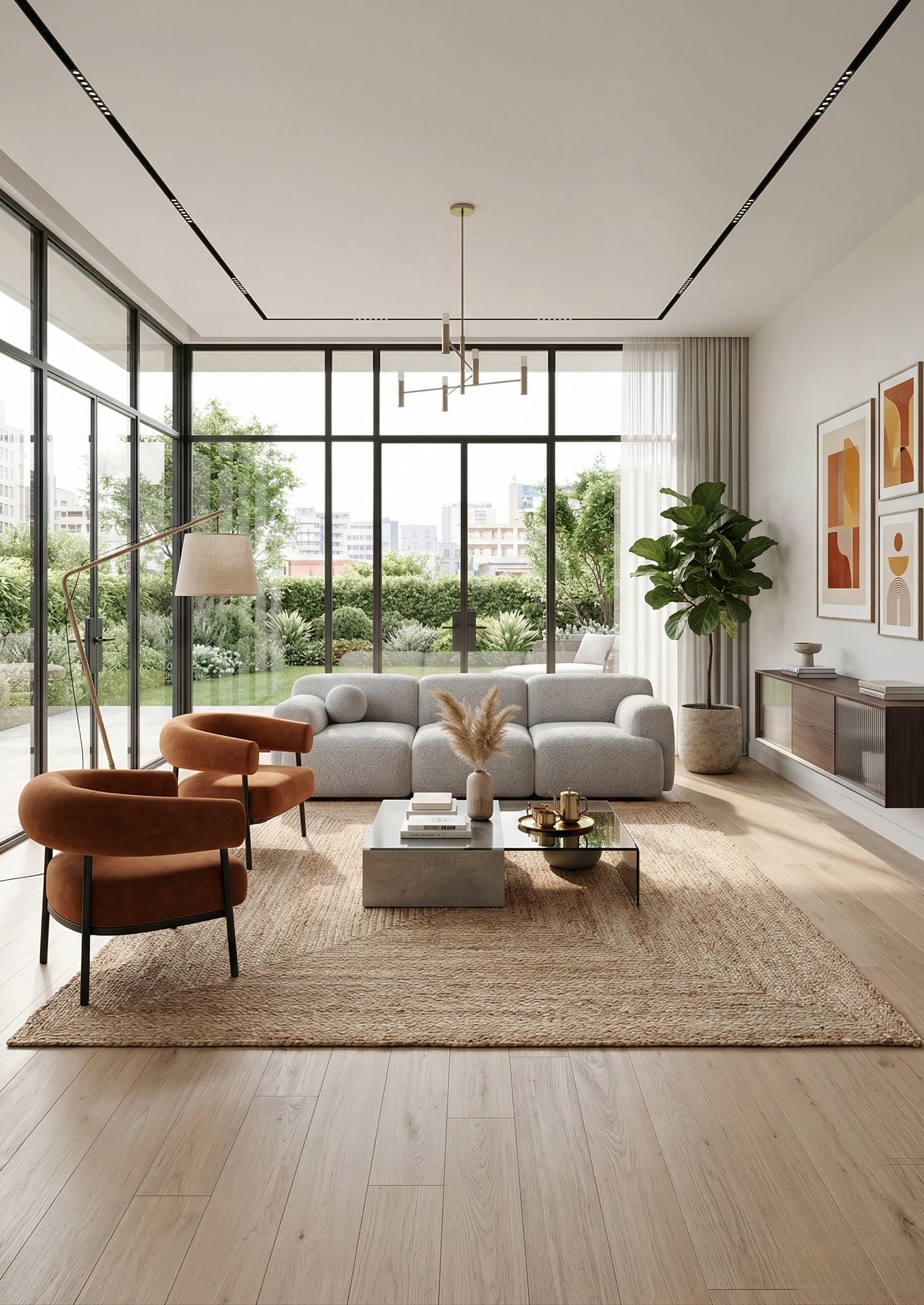
Wool, Viscose, Silk, Jute, Cotton: A Guide to Rug Materials
Choosing a rug first and foremost means selecting the right material for your space and lifestyle. The wool in the bedroom is not the same as the jute in the kitchen; the silk in a formal living room does not behave like the polypropylene in the hallway. This guide honestly explains each fiber.
Wool: The Foremost Rug Material
Wool is the traditional material par excellence, and for very good reasons. Its main properties:
- Natural resistance: Wool fiber contains lanolin, a natural grease that makes it water-repellent and dirt-resistant
- Durability: A good quality wool rug lasts 20–50 years with proper maintenance
- Thermal and acoustic comfort: Wool insulates from the cold and absorbs noise better than any synthetic fiber
- Aging gracefully: It ages well, acquiring a patina that enhances the item over time
Where to use it: Living room, bedroom, study. Avoid in very humid environments.
Maintenance: Regular vacuuming, professional cleaning every 3–5 years.

Silk: Luxury, Luster, and Fragility
Silk is the most prized fiber for oriental rugs. It allows for extremely high knot densities and an inimitable iridescent luster. But it has an Achilles' heel: it is delicate and not suitable for high-traffic areas. Pure silk rugs like Persian QUMs are collector's items rather than for intense foot traffic.
Where to use it: Bedroom, study, decorative wall hanging.
Maintenance: Only specialized professional cleaning.
Viscose: The Risk of Imitation
Viscose (rayon) is an artificial fiber derived from wood cellulose. To the eye, it mimics the luster of silk, and for this reason, it is often marketed as "artificial silk" or "vegetable silk." In reality, it has very different characteristics:
- It flattens easily under weight and foot traffic, leaving permanent marks
- It absorbs moisture and stains easily
- Cleaning is complex: water can create difficult-to-remove rings
- It lasts much less than real wool or silk
Viscose can be a valid choice if the rug is in a low-traffic area and the budget is limited, but it should be chosen consciously. It is not wool and it is not silk.
Jute and Natural Fibers
Jute is the ultimate green fiber: biodegradable, renewable, with a natural-chic aesthetic perfect for Nordic, boho, and wabi-sabi styles. Points of attention: it absorbs moisture, is not suitable for bathrooms or kitchens, and has a rough texture that is not for everyone's taste.
Other natural fibers in the same category: sisal (more durable than jute), seagrass (very hard, almost waterproof), and cotton (soft, machine washable, but more delicate).

Cotton: Washable and Versatile
Cotton is the most practical material for rugs in high-traffic areas or for families with children and pets. Indian dhurries and cotton kilims are machine washable, economical, and have a soft texture. The limitation is durability: cotton wears out more quickly than wool and soon loses its original appearance if not cared for.
Synthetic Materials: Polypropylene, Polyester, and Nylon
Synthetic rugs have made enormous strides in terms of aesthetic quality and are now available in very convincing imitations of wool and jute. Their strengths:
- Very high abrasion resistance (especially nylon and polypropylene)
- Easy to clean, even with abundant water
- Low cost
- Stain resistance due to production treatments
Their limitations: they do not "breathe" like natural fibers, tend to accumulate static electricity, and aging is not as elegant as with wool or silk.
Comparative Table of Rug Materials
| Material | Durability | Softness | Humidity | Price Range |
|---|---|---|---|---|
| Wool | ★★★★★ | ★★★★ | Medium resist. | Medium-high |
| Silk | ★★★ | ★★★★★ | Delicate | High-very high |
| Viscose | ★★ | ★★★ | Sensitive | Medium |
| Jute | ★★★ | ★★ | Sensitive | Low-medium |
| Cotton | ★★★ | ★★★★ | Good | Low |
| Synthetic | ★★★★ | ★★★ | Excellent | Low |
Explore collections by material: wool rugs and viscose rugs on CarpetLiving.


Share:
Persian silk rugs: luxury, luster, and everything you need to know
Carpets for restaurants and clubs, acoustics, safety and maintenance in commercial environments